Budgeting for buy now, pay later
Four small payments feel like nothing until three plans land in the same week.
Buy now, pay later is easy to say yes to. A $240 jacket becomes four payments of $60, the first one at the checkout, and the other three are somebody else's problem, six weeks from now. That's the whole appeal, and on its own one plan is fine. The trouble starts around the third plan, when the somebody else turns out to be you, and three payments from three different apps land in the same week you also pay rent.
Nobody signs up for that week. It assembles itself out of decisions that each looked small.
Why it slips past a normal budget
A monthly budget sees a $60 line under Clothing and moves on. It doesn't see that the same $60 comes out again in two weeks, and again two weeks after that, or that the couch you split into six is still going in November. Each payment is small enough to pass, and the plans don't talk to each other.
The app you paid with knows its own schedule and nothing about the others. Your bank knows what has already come out. What nobody is holding is the list of everything still to come, with dates, added up. That list is the only thing that tells you whether the next plan fits.
Put the whole plan on the calendar
In Forecast Commander a plan is entered once, as a plan. You give it the account it comes out of, the provider, the store, the total, the date of the first payment, how many payments, and how often. The form shows you every installment it is about to create, with its date and amount, before you save.
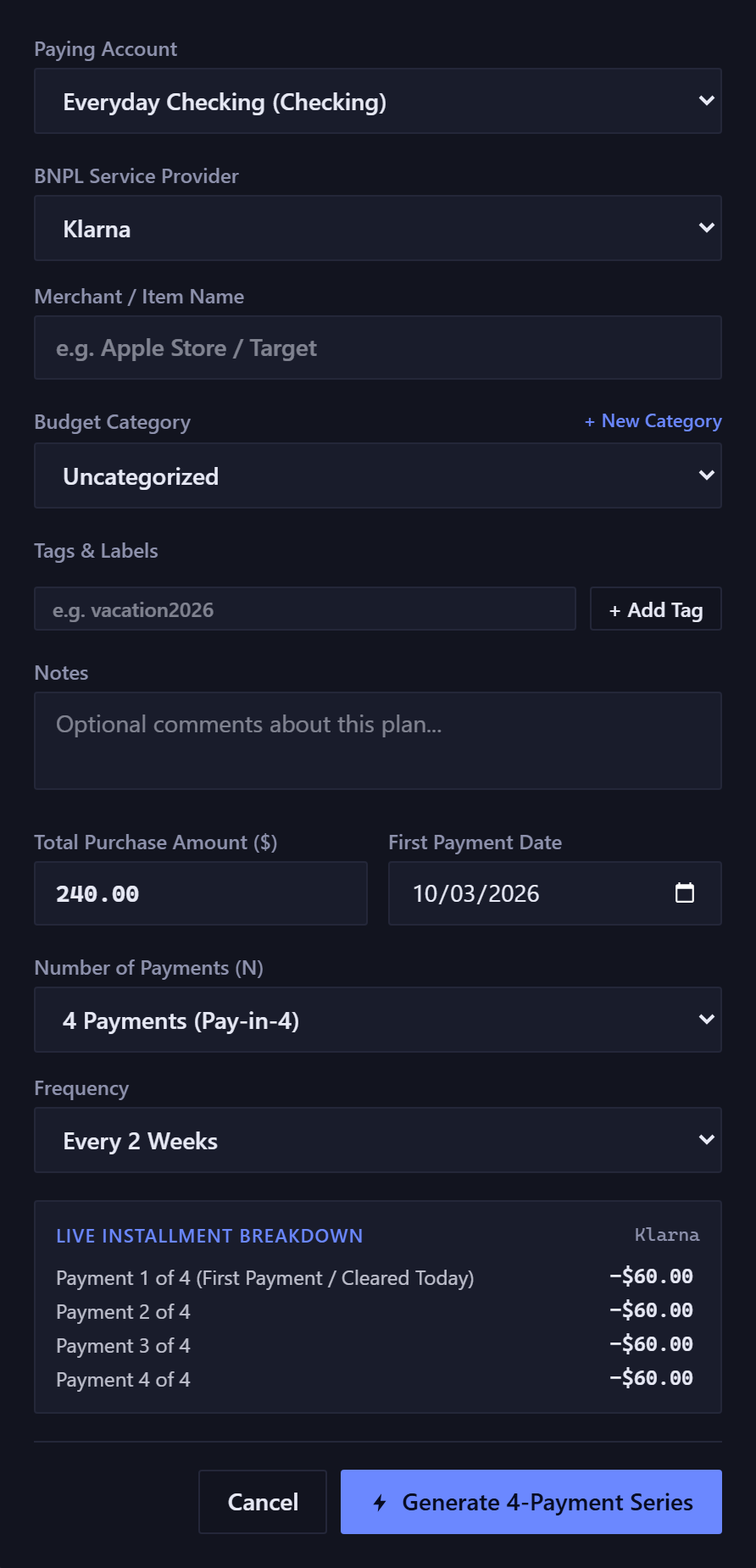
Then all of them go on the calendar on their dates, and the forecast counts them. The first payment is recorded as already paid today, and the rest are scheduled. If two plans put payments in the same week, that week's balance shows it, and the sentence at the top of the Command Center tells you your low balance and its date before you get there.
Reading the plans you already have
Each plan is a card: the store, the provider, the total, the payment amount, a progress bar with one segment per payment, and every installment listed by date with the paid ones struck through. Above the cards, two figures: how many plans still have a payment to come, and how much is still owed across all of them.
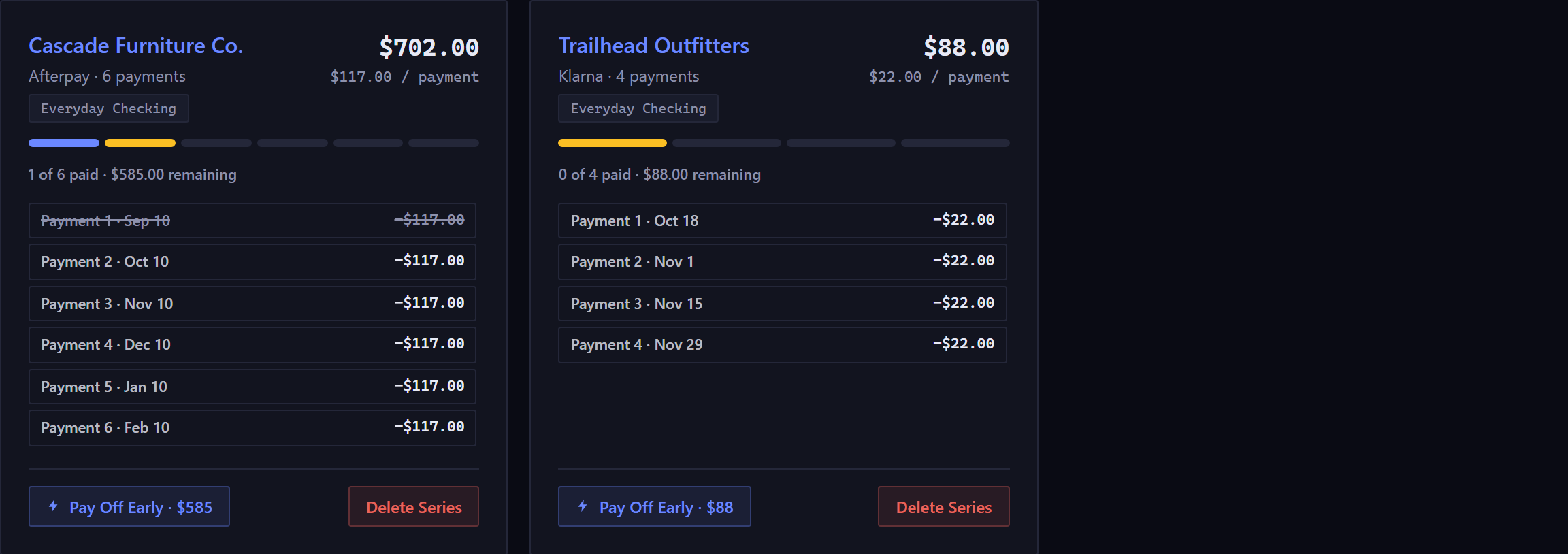
That second figure is the number to look at before you say yes to the next one. If it reads $1,485 across four plans, that's $1,485 the next six weeks have already spent.
Deciding whether the next one fits
The test is what adding four more $60s does to your lowest day. The Scenarios page answers that directly: add a purchase or a new bill, and read what it does to the lowest point in the forecast. If the low still clears your floor, the plan fits. If it doesn't, you know now, before payment three.
If you'd rather be rid of one, Pay Off Early clears the whole remaining balance today, removes the scheduled payments and records one payment instead. Useful when a good month arrives and you'd like fewer things coming out of the next few.
Three habits that keep it boring
Put the plan in the day you sign it, while the total and the dates are in front of you. Look at the remaining figure before adding another one. And when a plan is finished, leave it. A fully paid plan still shows as a card and counts toward nothing, and it's a nicer record than deleting it.
The 35 days cost nothing and need no card, and a plan takes about a minute to enter. Read the BNPL Plans guide.