What a cash flow calendar is
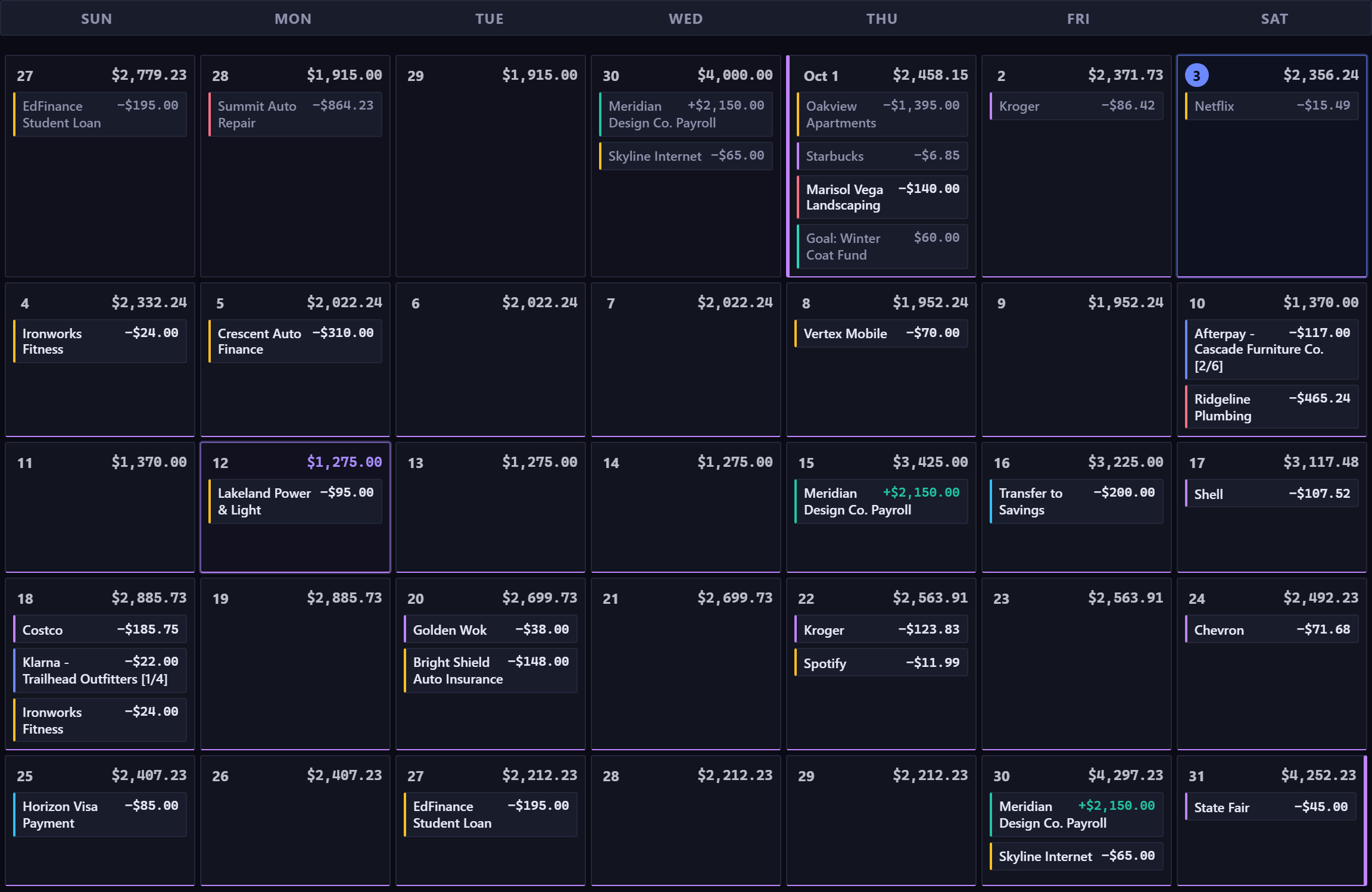
A ledger is a list of what happened. A cash flow calendar is a month grid of what's going to happen: the paycheck on the 15th, the rent on the 1st, the car payment on the 22nd, the streaming charge on the 3rd, each on its date, and on every day the balance you'll have after that day's items clear. Read it left to right and you're reading your next 30 days.
What it is built from
A calendar built from what you did last year can hold only things that have happened at least once. This one is built from what you know is coming. Your recurring rules, entered once, put a paycheck or a bill on every date it falls. The one-offs you added sit on their days. The installment plan you signed yesterday is on it, and so is the raise that starts in March, because you said so, and nothing on it is a guess.
What it shows that a ledger cannot
The low point. Somewhere in the next few weeks there's a day when the balance is lowest, after the bills and before the next check, and the calendar marks it. The app reads that day back to you as one sentence: how long you stay above your floor, and your low balance and its date. The chart draws the same shape, with the safety floor you chose as a line, so a month that dips under it is visible before it arrives.
In Forbes Advisor's 2026 testing of budgeting apps, the ones testers rated highest were the ones that helped them plan and allocate before spending. A calendar is the plainest form of planning before spending: the money is on the day before the day arrives.
Why a budget needs one
A category budget answers one question well: how much for groceries this period. It can't answer whether you can pay the card on the 22nd, because that depends on the order things land in, and a category has no dates in it. The calendar answers the second question, and in Forecast Commander the budget reads from it. What's scheduled counts before it happens, so the budget's remaining figure already has next week's bills taken out.
Keeping it true
A calendar is only useful if it matches the bank, and keeping it matched is one click. When a bill comes due, settle it: the chip moves from scheduled to settled and the running balance holds. If the amount came out different, edit it, and every balance after it corrects. Unplanned spending goes in through one row, a date, a payee, an amount, and it lands on its day like everything else.
Give it 35 days free with no card, and your first month is on the calendar in five minutes. Read the Command Center guide.