How much should you put toward debt each month?
The rules of thumb all have the same flaw: they name a number before they've seen your bills. A fixed share of income, a round figure, as much as you can. The number is different every period, and your budget already knows what it is. Income for the period, minus the bills that land in it, minus what you set aside for groceries, gas and the goal, equals the number. Whatever that is, that's the payment, and it moves with the period.
Find the number
On the Budgets page the equation row runs from your true balance, through what's scheduled and what's budgeted, to what's unassigned. Unassigned is the number. The scheduled figure comes from the calendar and already holds every bill that lands before the period ends, and unassigned counts the groceries you budgeted whether or not you've bought them yet.
Managing debt is the fourth most common reason people use a budgeting app at all, in Forbes Advisor's 2026 survey, behind tracking spending, keeping a budget, and improving credit. It isn't a side feature here.
What an extra payment buys
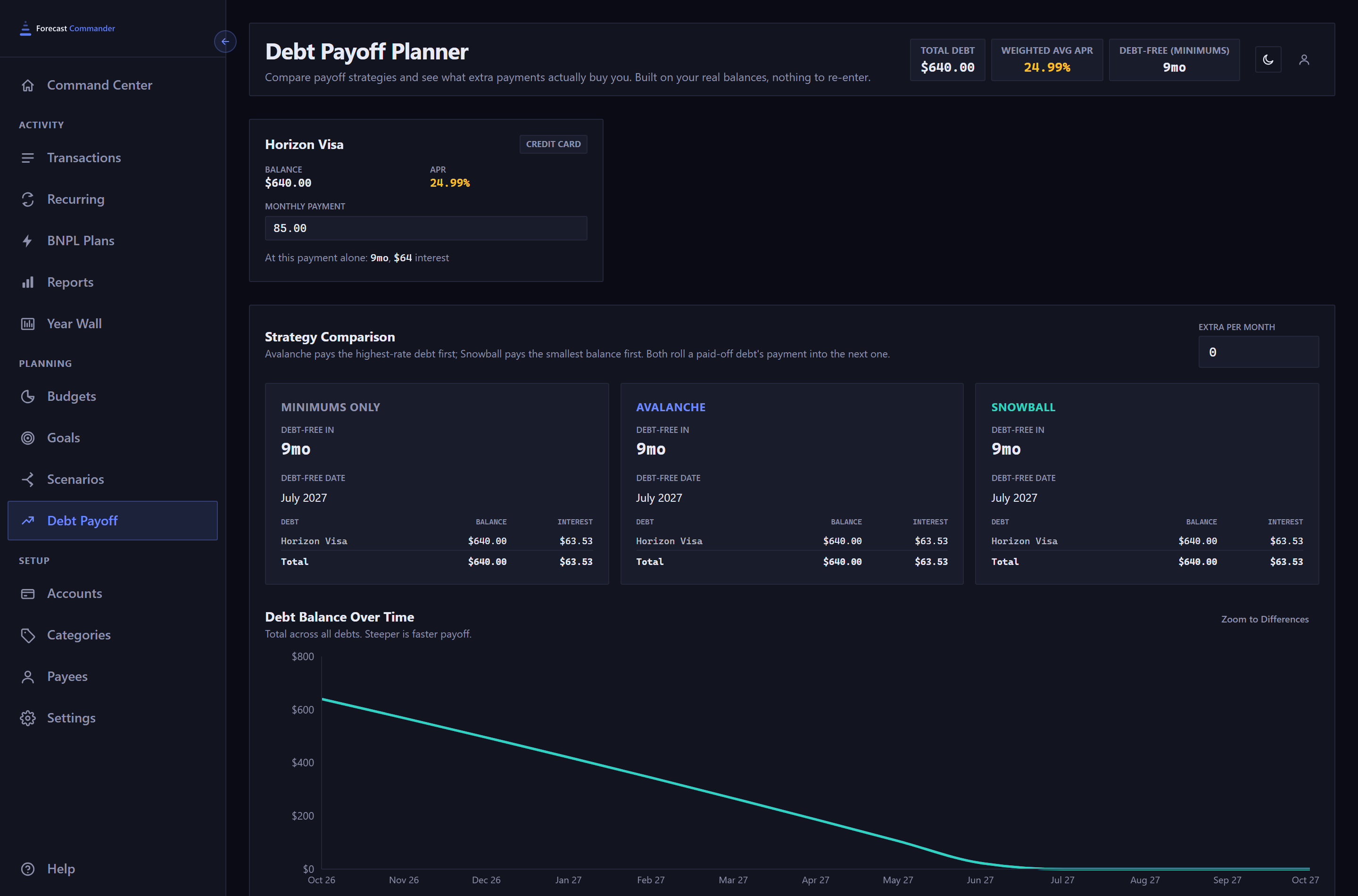
Open the Debt Payoff page. Every debt with a rate and a monthly payment takes part; one without a rate is listed under Needs a Rate with a field to add it. The monthly payment field on each card starts from what your recurring rules actually pay into that account, and it's yours to change. Add the period's unassigned figure to it and every projection on the page re-runs. The debt-free date moves, and so does the interest total. That's what the extra buys, in months and in dollars.
Avalanche, snowball, and the thing that matters more
Avalanche puts the extra on the highest rate first and pays the least interest. Snowball puts it on the smallest balance first and clears a debt soonest. The planner shows both dates for your debts, side by side, so the choice is a comparison you make with your own numbers. Either way, the lever that moves the date most is the extra payment landing every period, and budgeting by the period is how you find it.
When interest outruns the payment
If a card's payment doesn't cover its interest, the planner says so: never pays off. It leaves that verdict standing until the payment changes, and once the payment covers the interest, a date appears. That's the card whose number to watch first.
The planner works from the first rated debt you enter, and the 35 days are free with no card. Read the Debt Payoff guide.