The day you are debt-free
There are two well-known ways to pay down several debts at once, and a great deal of writing about which is right. Forecast Commander shows you both, with the date each one makes you debt-free and the interest each one costs, and lets you pick.
Two strategies, one question
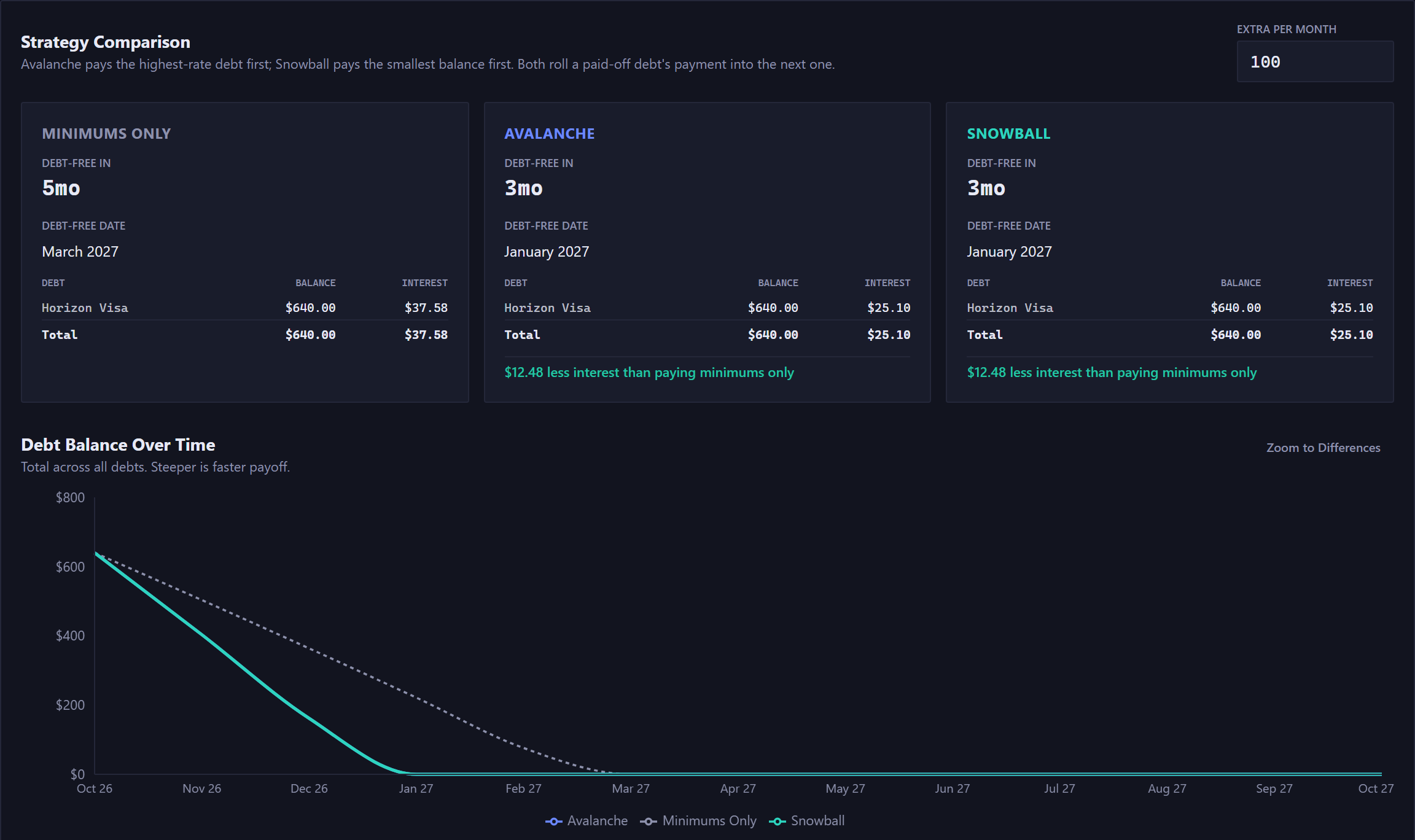
Avalanche puts every extra dollar on the debt with the highest interest rate first, then the next. It costs the least interest. Snowball puts every extra dollar on the smallest balance first, then the next. It clears whole accounts sooner, which some people find easier to keep doing. Minimums only is the third card, there so the other two have something to be compared against.
The date each plan gives you
Each strategy is a card with the month you're done and the interest paid in total, and the chart below them draws the balances along the way. Change the extra amount you can put toward debt each month and all three cards move. So you can see what an extra hundred dollars a month buys, and the answer is a date.
Why it lives beside the forecast
A payoff plan is a set of payments, and payments land on days. Each debt's payment rule is on the calendar with everything else, so the low point already includes it. An extra you try in the planner stays a what-if until you add it to the payment rule, and then it lands on its day like the rest. When the last card reads zero, the money it was taking is on the forecast as room, and a goal can take it over on the same schedule.
What to enter
Each debt is an account: its balance today, its interest rate, and the monthly payment you make on it, which becomes the rule that pays it. That's all the comparison needs. The extra amount is one field, and it's meant to be changed: try a hundred, try fifty, try what's left after the low point, and read the three dates each time. Once an extra is in the payment rule, the forecast shows whether the money is really there, because the payment lands on a day and the day has a balance.
Where the planner stops
It doesn't tell you which strategy to choose, and it doesn't negotiate, consolidate, or move money. It shows the arithmetic of the two plans and leaves the decision with you. Some people pick the cheaper plan. Some pick the one they'll keep. Both are right answers to different questions, and the page shows the cost of each.
Enter the balances and the rates and read the date, free for 35 days with no card. Read the Debt Payoff guide.